Barbershop Waste: Sharps Bins and BDO Registration
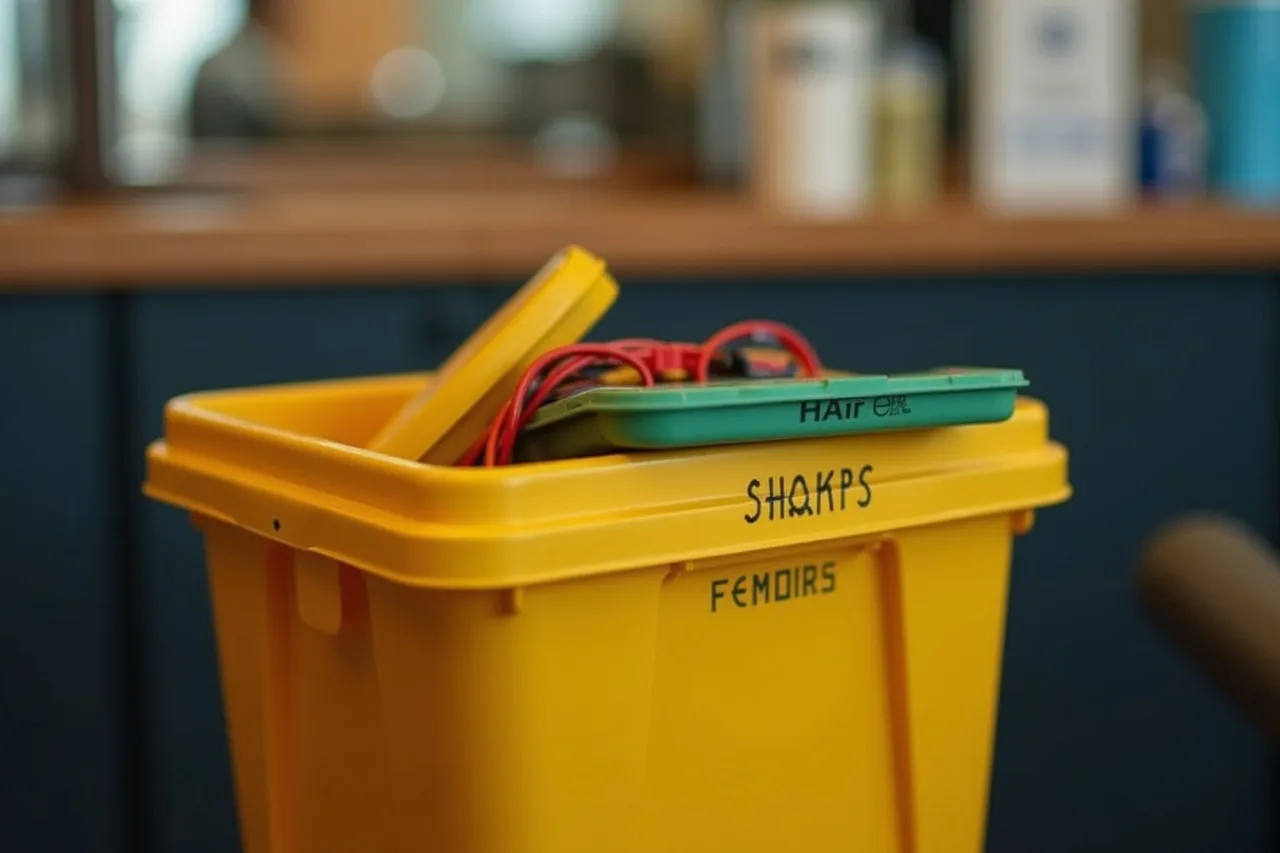
You finish a razor shave, swap the blade and drop the used one into the ordinary bin under the wash basin. Routine.
You finish a razor shave, swap the blade and drop the used one into the ordinary bin under the wash basin. Routine. Except this is one of the few places where a barbershop genuinely breaks the law without even knowing it. Sharp blades, needles with certain treatments, and on top of that the question of whether you're even registered with the BDO (the Polish waste register) – this is an area inspectors check more and more often, and one where salon owners have the biggest gaps. This article breaks down waste management in a barbershop into its component parts: what the BDO is, what sharps waste is and how not to trip up over it.
Two types of waste in a barbershop
Let's start with the division. In a salon, two significant waste streams arise that require attention:
- Sharps waste – used blades, razor blades, replaceable cut-throat blades, any needles; they can cut and may have come into contact with blood
- Other "specific" waste – e.g. materials that have been in contact with blood (cotton pads, tissues), used packaging from chemical products
Cut hair is usually municipal waste – it has had no contact with blood and isn't hazardous. The problem starts with blades and anything that has been in contact with a client's blood.
This difference is the crux of the whole topic. As long as you're talking about hair and empty packaging, you're in the world of ordinary rubbish. The moment a blade appears, or a cotton pad with blood after a nick by the ear, you enter a different regime – waste requiring special handling. And it's this second category that determines your obligations towards the BDO and the waste collector.
Sharps waste – how to handle it
A used blade is waste that can cut the person collecting the rubbish and transmit an infection. That's why it doesn't go into the ordinary bin. The rules:
- collect them in a rigid, sealable container that is puncture-resistant (a so-called sharps container)
- don't overfill the container – close it once it reaches the indicated fill level
- hand them over to an authorised waste collector, not into the ordinary municipal stream
- keep the document confirming the handover of the waste
Waste classification stems from the Minister of Climate's 2020 regulation on the waste catalogue. Waste that has been in contact with blood, or is sharp, is treated as requiring special handling – not like ordinary rubbish.
The BDO – what it is and who it applies to
The BDO is the Database on Products and Packaging and on Waste Management, maintained under the Act of 14 December 2012 on waste. It's an electronic register in which the generation and transfer of waste are recorded. Who has to register? As a rule, businesses generating waste other than solely municipal – and sharps waste and blood-contact waste are not municipal.
In practice this means a barbershop that generates sharps waste should check whether it is obliged to register with the BDO and keep waste records. Registration is done electronically through the BDO system.
Registration and record-keeping – in brief
| Step | What you do |
|---|---|
| 1. Check the obligation | determine whether your waste requires a BDO entry |
| 2. Registration | application in the BDO system, obtaining a registration number |
| 3. Contract with a collector | sign a contract with a firm collecting hazardous/sharps waste |
| 4. Record-keeping | keep waste transfer cards (KPO) in the system |
| 5. Annual report | submit the annual waste report on time |
What it costs and what neglect risks
Collection of sharps waste costs in the region of tens to a couple of hundred zł per collection, depending on the firm and quantity – for a small salon it's a modest, periodic expense. By contrast, the lack of a required BDO entry or failure to keep records is a real risk of administrative penalties, which under the waste act start from several thousand zł. Registration is cheap or free – the penalty for not having it is not.
How to fit this into the salon's documentation
Keep your waste documents (BDO number, contract with the collector, transfer cards, collection confirmations) together with the rest of your sanitary documentation. A sanitary inspector may ask how you handle sharps waste, and in an environmental inspection the BDO is checked. How to arrange the lot, we show in the article barbershop sanitary documentation – the complete inspection-ready set. Handling blades after blood contact also connects with the article disinfection and sterilisation log – template.
The sharps container – how to use it
The container itself achieves nothing if you use it badly. A few rules worth posting alongside it:
- place the container close to the station where you change blades – the further away, the greater the temptation to drop it in the ordinary bin
- drop blades in immediately after changing them, never leave them loose on the counter
- don't fill above the line marked on the container – an overfilled one risks a cut
- once closed, don't reopen it – a sealed container waits for collection
It's a small thing that protects not only you but also the person collecting the waste. A cut from a blade that has been in contact with blood is a real infection risk – which is why the regulations take this waste stream seriously.
Common misunderstandings about the BDO
The BDO causes plenty of confusion among salon owners. Three things worth setting straight:
- "The BDO is only for big companies" – no; the obligation depends on the type of waste, not the size of the business
- "I pay for rubbish, so I'm covered" – the municipal charge doesn't cover sharps or hazardous waste
- "I'll register when an inspection comes" – late registration doesn't undo the period during which you operated without an entry
The simplest approach: check the obligation at the start, register if it applies, and sign a contract with a sharps waste collector. An hour's work at the outset saves thousands of zł in penalties later.
Frequently asked questions
Is cut hair hazardous waste?
No. Cut hair with no blood contact is usually municipal waste and goes into the standard stream. Special handling is required for sharps waste (blades, razor blades) and materials that have been in contact with blood.
Where do I dispose of used blades and razor blades?
In a rigid, sealable, puncture-resistant container intended for sharps waste. Once full, you hand it over to an authorised waste collector and keep the handover confirmation. You don't put them in the ordinary bin.
Does a barbershop have to be registered with the BDO?
If it generates waste other than solely municipal – for example sharps waste or blood-contact waste – it should check whether it is obliged to register with the BDO and keep records. Registration is done electronically in the BDO system and involves obtaining a registration number.
What does failing to register with the BDO risk?
The waste act provides for administrative penalties for the lack of a required entry or failure to keep records, reaching several thousand zł and more. Registration itself is cheap or free, so neglecting this obligation simply doesn't pay.
Sharps waste and the BDO are an area where a costly mistake is easy to make. BarberReady gives you instructions for handling sharps waste, a step-by-step list for BDO registration and a place for your collection documents – built into the complete documentation set for a hairdressing establishment. You know what to do and where to keep it.