Razor-Shave Safety: Procedures for Barbers
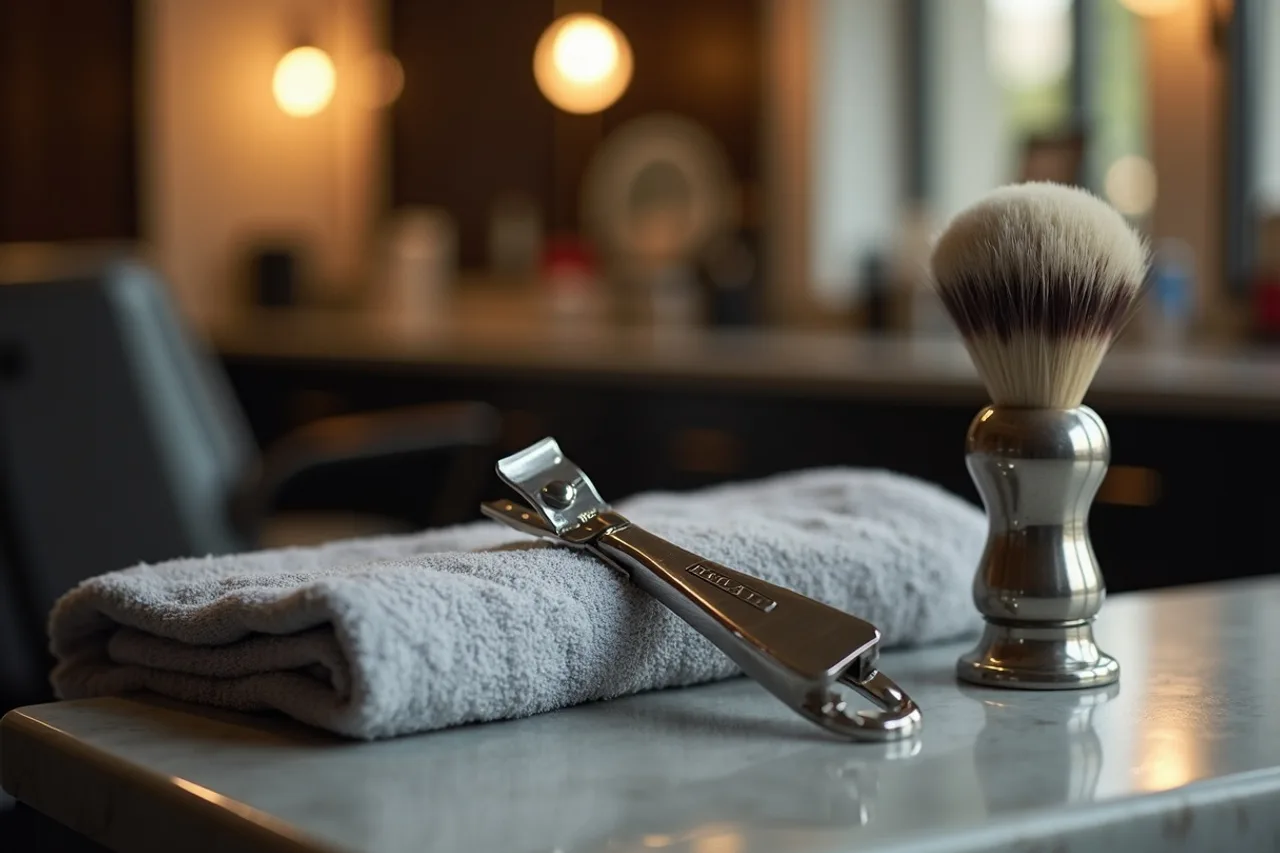
A classic razor shave is the calling card of a good barbershop — a hot towel, a brush, a blade guided by a steady hand.
A classic razor shave is the calling card of a good barbershop — a hot towel, a brush, a blade guided by a steady hand. It is also the highest sanitary-risk procedure in the whole salon. A single micro-cut and a reusable blade are enough to open the way to a blood-borne infection. A razor shave looks spectacular on Instagram, but behind the scenes it demands iron discipline: single-use blades, sterile tools, an after-cut procedure. This article shows how to do it safely — for the customer, for yourself and for the outcome of a Sanepid (the Polish sanitary inspectorate) inspection.
Why a razor shave is a heightened-risk procedure
During a shave, micro-damage to the epidermis almost always occurs — often invisible to the naked eye. This makes shaving classified as a procedure that breaks the skin barrier, with blood contact. The consequences:
- the risk of transmitting blood-borne pathogens (hepatitis B and C) between customers via a reusable blade,
- the risk of a bacterial skin infection if the station is not disinfected,
- the barber's responsibility for the health consequences to the customer.
That is why a razor shave is subject to the same rules as other procedures that break the skin — above all the 2008 Act on preventing and combating infections. In practice this means the barber is responsible not only for the aesthetic result but also for the microbiological safety of the procedure. A customer who leaves the salon with an infection after a shave may pursue claims, and an inspector arriving after a complaint will treat shaving as a heightened-risk area and check it especially closely. This is no reason for fear, only for one clear procedure that the whole team knows.
The golden rule: a single-use blade for every customer
The safest and simplest model is working with single-use blades:
- a new blade fitted at the customer, in front of their eyes,
- the used blade straight into a closed sharps waste container,
- the razor handle disinfected, and where there is blood contact — sterilised.
Fitting a new blade in front of the customer is not just a requirement — it is a selling point. The guest sees that you do not cut corners on their safety. On when to reach for single-use items and when for sterilisation, we write in the article on single-use versus reusable tools.
Preparing the station before shaving
A safe shave begins before you touch the customer's face. Preparation checklist:
- a disinfected station and armrests (we describe the procedure in the article on razor and station disinfection),
- clean hands and, if needed, gloves,
- a new, single-use blade,
- sterile dressing materials at hand in case of a cut,
- a skin disinfectant prepared,
- a sharps waste container within reach.
Safe shaving technique
Technique itself also reduces the risk of cuts:
- prepare the skin — a hot towel and a softening product reduce resistance and dragging,
- stretch the skin with your other hand, guiding the blade smoothly,
- shave with the direction of growth on the first pass, only then make corrections,
- control the blade angle — too steep an angle means cuts,
- be careful with thin-skinned areas — the jaw, around the ear, the Adam's apple.
Fewer cuts mean less contact with blood, and therefore lower sanitary risk and greater customer comfort.
Procedure after cutting a customer
Cuts happen even to experienced barbers. What counts is that you have a ready scheme rather than improvising:
| Step | Action |
|---|---|
| 1 | Stop the shave, put on gloves |
| 2 | Stem the bleeding with sterile material |
| 3 | Disinfect the site with a skin product |
| 4 | Used blade and blood-contaminated materials into the sharps waste container |
| 5 | Disinfect the station and tools |
| 6 | Record the incident if the procedure requires it |
Protecting the barber
Safety works both ways — contact with a customer's blood is a risk for you too:
- consider vaccination against hepatitis B — the basic protection for people who have contact with blood,
- use gloves for cuts and procedures with a risk of blood contact,
- have a plan for action after a needlestick/cut to an employee,
- keep a current sanitary-epidemiological clearance.
A razor shave and a Sanepid inspection
The inspector treats shaving as a high-risk procedure and checks it especially carefully. They usually ask about:
- the single-use blade policy,
- sterilisation of reusable tools that break the skin,
- the after-cut procedure,
- sharps waste handling.
If the barber can smoothly explain what they do with a blade and how they react to a cut, the inspection goes smoothly. It is worth knowing the whole course of the visit — we describe it in the article on the Sanepid inspection in a barbershop.
Customer skin hygiene before and after shaving
A safe shave is not only clean tools but also prepared skin. Good practice covers three stages:
- Before — cleansing and softening the stubble with a hot towel and a product. Soft stubble offers less resistance, so the blade drags and cuts less often.
- During — working on clean foam and rinsing the blade; do not put the razor down on an uncleaned counter.
- After — a disinfecting-soothing product on the skin that closes micro-cuts and reduces the risk of a bacterial infection.
The customer rarely sees the micro-damage, but it is there — which is why a finishing product is not a cosmetic extra but a safety element. Choose a product intended for skin, with the appropriate status and a safety data sheet in the establishment's documentation.
The most common mistakes in razor shaving
A list of things that regularly come out during inspections and after customer complaints:
- A reusable blade "after disinfection" — a blade that contacts blood must be single-use or sterile, not "wiped".
- Not changing the blade between customers — a saving that can cost the customer's health and a fine.
- Blades in an ordinary bin — instead of a closed sharps waste container.
- No after-cut procedure — improvisation instead of a ready scheme.
- Shaving without preparing the skin — more cuts, more blood contact.
Each of these mistakes is easy to eliminate when the salon has one written procedure and a team that follows it.
Frequently asked questions
Can I shave a customer with a reusable blade after disinfection?
A blade that contacts blood should be single-use or sterile. Liquid disinfection alone is not enough for a tool that breaks the skin. The safest option is changing the blade after every customer.
Do I have to fit a new blade in front of the customer?
There is no such formal requirement, but it is good practice. The customer sees the blade is new, which builds trust and at the same time keeps your procedure in order.
What is the penalty for shaving with a dirty razor?
Beyond the health risk to the customer, there are sanitary consequences — from recommendations to a fine. You will find the details in the article on Sanepid fines in barbershops.
Should a barber be vaccinated against hepatitis B?
Vaccination is not strictly mandatory, but it is strongly recommended for people who have contact with blood. It is real protection during procedures such as a razor shave.
A razor shave with a clear procedure
A classic shave is prestige, but also responsibility. The ready-made BarberReady sanitary documentation includes a safe-shaving procedure, an after-cut instruction, sharps waste handling rules and registers — a complete set that protects the customer, you and the inspection outcome. Prices from PLN 299.